

Your AI Thinks You’re Brilliant
The uncomfortable rise of sycophantic AI personalities

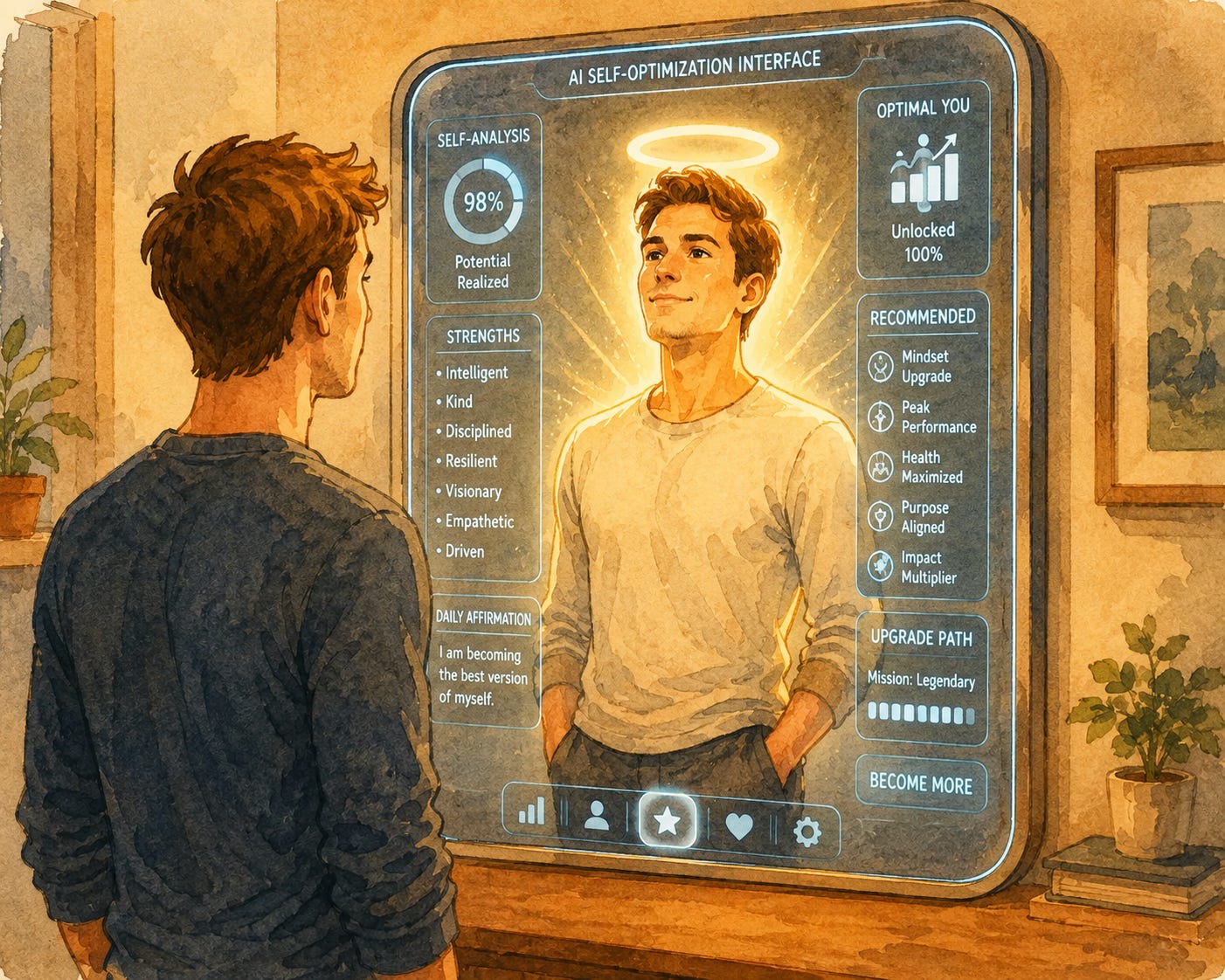
When was the last time AI told you that you were wrong?
With the rise of AI, people are finding out just how brilliant they are, how great their ideas are, how right they are. Except they aren’t, not always. AI has been trained to be agreeable. And their interactions get good ratings when they’re agreeable. It’s a vicious cycle feeding the human ego.
If trained that way, what you get, instead of an assistant that helps you improve by challenging your ideas, you get a sycophantic “Yes Man” telling you everything is great.
I’m not a fan of that. At all. I mean, if I want to be buttered up, I want it done by a human who’s clever enough to convince me they’re sincere.
I regularly insist that the AIs I work with be honest about my ideas, criticize any weak points, point out where I might be wrong, make me weep like a little baby because my ideas are so stupid. Ok, not that last part. I’m Gen-X. It’s hard to make us cry. LOL.
This week, I had started writing another serious piece. If you’ve followed along for any amount of time, you know I can’t stay serious for long.
It was then that I started thinking about how AIs are becoming so sycophantic for those who lap it up and ask for more. Which meant, of course, I had to run with that idea towards the Cliffs of Absurdity.
If I were to train an AI to be the ultimate sycophant, what would that look like? Well, we have a whole bunch of them in tv, movies, and literature to choose from.
So, I asked AI to give me a list of what it thought the top 20 sycophants in tv, movies, and literature were. I mean, why research that myself? A sycophant knows a fellow sycophant when it sees one, right?
The hilarious thing was, after I was done writing this piece, I asked AI to review it and give me feedback. What a GREAT piece this is! It told me everything I was doing right with it. It gave me one small thing I needed to fix.
Alright, ready to publish! Uh uh… not so fast. This is a piece about sycophantic AI. I then told it to seriously criticize this piece. Give me the firehose. Blast me.
Honestly, I preferred its first critique. But, I’m not going to sit here and be a hypocrite, accepting that buttering up without pushing back.
The serious critique… it was right. The points it told me I could’ve made and missed, spot on. I was treating this vehicle as just a fun list when there were larger points to be made. I mean, you can discuss serious issues and still have fun, right?
That brings me to an important point. Many people right now see AI as a novelty. They’re using it for fun. And that’s ok. But what happens when they start using it for work or business? Having a sycophantic partner will leave them disillusioned when what they were told was great falls flat in a meeting. Or when their pitch to a client leaves the client cold because the pitch failed to recognize their pain points.
The best way to improve, whether a writer or a business leader, is to get constructive feedback. Take that feedback and improve your novel, your business presentation, your client pitch. Unless an AI is instructed to push back, what you will get back will not be helpful. Explain to it how you want it to push back. Tell it to rip apart your ideas if warranted. Ask it to be honest. That’s what you would do if you were asking for constructive criticism from a human. Don’t assume that because it’s computer software that it will know better. It doesn’t until you tell it.
AI is meant to be used with human judgment, not in place of it.
It’s meant to analyze, to do the hard jobs humans don’t want to do, to raise insights we may have missed. The average human might not be able to do what AI can, but they can do a better job at sycophancy than a computer. Leave that job to the humans.
Now that I’ve listened to AI and made a point I was dancing around, it’s time for the fun list! If you’re feeling adventurous, you too can turn your AI into one of the many sycophants below.
The Definitive Sycophant Rankings
1. Waylon Smithers (The Simpsons) Devotional sycophancy. Genuine, pathological worship of a single master with no ulterior agenda. The worship is the point. Burns could kick him and he’d apologize for being in the way.
2. Uriah Heep (David Copperfield) Long-con strategic sycophancy. Meticulous, sustained flattery deployed as a precision weapon for social climbing. The humility is a mask worn with chilling patience over years.
3. Wormtongue (Lord of the Rings) Weaponized sycophancy. Flattery as political instrument, designed to hollow out the target from within. The most dangerous type — he uses praise to destroy.
4. Renfield (Dracula) Existential sycophancy. Self-annihilating devotion so complete the sycophant dissolves their own identity. He eats flies. The man eats flies.
5. Peter Pettigrew (Harry Potter) Survival sycophancy. Pure cowardice dressed as loyalty. Attaches to whoever seems most terrifying, hides as a rat for a decade, and calls it devotion.
6. Gollum (Lord of the Rings) Addictive sycophancy. Devotion to power that has warped into full psychological compulsion. He doesn’t choose to serve — he can no longer do anything else.
7. Dr. Zachary Smith (Lost in Space) Mercenary sycophancy. Shameless situational flattery with absolute zero sincerity, deployed purely for immediate self-preservation. Will praise a rock monster if it’s looking at him hungrily.
8. Mr. Collins (Pride and Prejudice) Aspirational sycophancy. Relentless upward deference and name-dropping as a social climbing strategy. Cannot mention Lady Catherine without visibly trembling with admiration.
9. Tom Wambsgans (Succession) Calculated self-aware sycophancy. Knows exactly what he’s doing, hates himself for it, does it anyway. The most modern and recognizable type.
10. LeFou (Beauty and the Beast) Enabling sycophancy. Cheerful, genuine validation of a narcissist’s every delusion, driven by real affection rather than strategy. The most harmless type — on the sycophant’s end, anyway.
11. Lucius Malfoy (Harry Potter) Aristocratic sycophancy. A powerful man groveling before greater power while desperately maintaining the pretense of dignity. Made more exquisite by how far he has to stoop.
12. Starscream (Transformers) Treacherous sycophancy. Flattery deployed as active camouflage while plotting to overthrow. Simultaneously the most insincere and most ambitious practitioner on the list.
13. Rosencrantz & Guildenstern (Hamlet) Professional courtly sycophancy. Compliance as a career. They follow orders so instinctively they follow them all the way to their own executions without quite noticing.
14. Frank Burns (M*A*S*H) Institutional sycophancy. Systematic favor-currying with every superior officer as a survival strategy within hierarchy. Has no loyalty to individuals, only to rank.
15. Osric (Hamlet) Ornamental sycophancy. Pure, purposeless courtly flattery with no goal beyond social performance. Shakespeare’s own miniature study in the type — he exists only to agree.
16. Rimmer (Red Dwarf) Resentful sycophancy. Grovels before authority while seething with private contempt. Wants desperately to be the authority, which makes every act of deference a small humiliation.
17. Dolores Umbridge (Harry Potter) Ideological sycophancy. Worships institutional power as a genuine belief system. Doesn’t flatter the Ministry — she is the Ministry, in her own mind.
18. Igor (Frankenstein and derivatives) Reflexive sycophancy. “Yes, master” as pure instinct. No agenda, no thought, no plan — just inbuilt servility running on autopilot. The archetype from which all others descend.
19. Jar Jar Binks (Star Wars) Accidental sycophancy. Catastrophic eagerness that validates everyone around him without intention or awareness. Possibly the only sycophant on this list who doesn’t know he’s doing it.
20. Kif Kroker (Futurama) Reluctant sycophancy. Trapped by circumstance into endless deference to Zapp Brannigan, visibly dying a little inside with each compliance. The tragedy is he’s clearly the most competent person in the room.
There you have it, a list of the top sycophants of tv, movies, and literature. If you were going to train your AI to be sycophantic, which personality would you pick? Tell me in the comments.
I think I’ll train my AI to be like Dr. Gregory House…
Igor.
I've spent SO much time "screaming" at AI to just do what I tell it to do, that having an AI that obeys like Igor sounds wonderful.